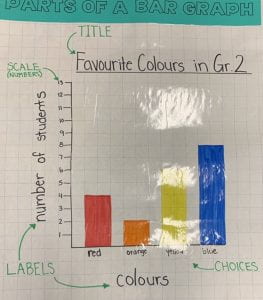
There has been so much energy, learning, and excitement in Room 112, and I’m thrilled to share all the wonderful things we’ve been working on together.
Math
During our math blocks, students are exploring and deepening their understanding of both 2D and 3D shapes. They will learn to recognize, name, describe, compare, and sort 3D shapes including cubes, rectangular prisms, spheres, cylinders, cones, and pyramids. Students will use new math vocabulary such as faces, edges, and vertices to describe each shape’s attributes and will identify these shapes in their everyday environment, such as balls, boxes, and cans. They will also learn the difference between 2D (flat) and 3D (solid) shapes.
In addition, students will work with 2D shapes including triangles, squares, rectangles, circles, ovals, hexagons, pentagons, rhombuses, and trapezoids. They will identify and name shapes in different orientations, describe them by the number of sides and corners, and determine whether sides are straight or curved. Through hands-on activities such as drawing, labeling, building structures, and sorting objects, students will classify shapes based on their properties and recognize 2D shapes in their environment, such as signs, windows, and books.


This month in Math, students will also explore the concept of area. They will learn that area is the amount of space inside a shape and will use square tiles and grid paper to cover surfaces without gaps or overlaps. Students will count square units to find the area of rectangles, compare different shapes, and build their own shapes with a given area. They will also use math vocabulary such as area, rows, columns, and square units to explain their thinking. They will eventually connect area to repeated addition and multiplication (3 rows of 4 =12 square units).
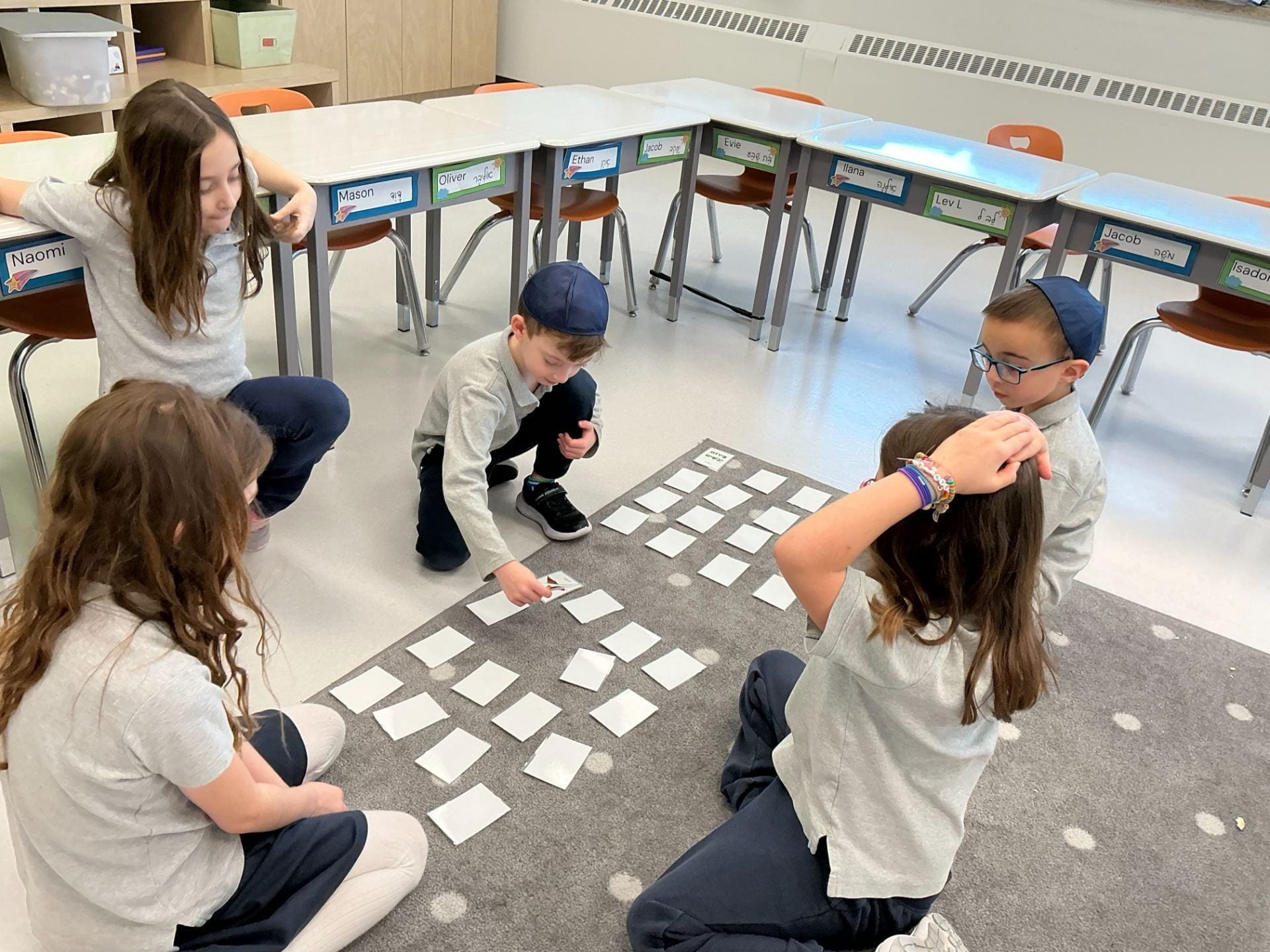
Our students are continuing to strengthen their understanding of addition and subtraction facts up to 20. We are working toward developing quick recall of these facts, with the long-term goal of solving them efficiently without relying on fingers or number lines. Building this fluency helps students feel more confident and supports their success in more complex problem solving.
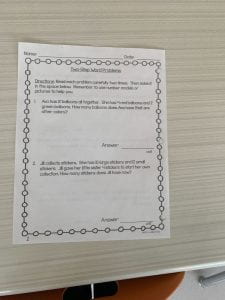
We are also continuing to practice double-digit addition and subtraction. These skills are being applied to word problems, where students are learning to carefully read, identify important information, and choose the correct operation. It has been wonderful to see their perseverance and growth as they develop stronger strategies and mathematical confidence!
Science
At the beginning of this term, students explored the exciting world of matter! Throughout the unit, they learned that matter is anything that has mass and takes up space, and that everything around us is made of matter. They investigated the three states of matter—solids, liquids, and gases—and discovered that solids have a definite shape and volume, liquids have a definite volume but take the shape of their container, and gases spread out to fill the space around them. Through hands-on experiments and observations, students explored how heating and cooling can cause matter to change states, such as melting, freezing, and evaporating. One of their favorite experiments was making ice cream floats, where they observed how a solid (ice cream) and a liquid (pop) interact to create fizzy bubbles filled with gas. Using scientific vocabulary like solid, liquid, gas, volume, melt, and freeze, students practiced sorting, comparing, predicting, and recording their observations as young scientists.

Social Studies






 Purim
Purim